Hearing is one of our most essential senses, connecting us to the rhythm of life, the voices of our loved ones, and the atmosphere around us. In India, where our festivals are loud, our streets bustling, and our family gatherings filled with overlapping conversations, losing even a sliver of this sense can be deeply felt.
But loss hearings are never an “all or nothing” situation at all. This is the alphabet. Understanding the extent of your specific injury is the first step toward getting the right answer. Many of the people we meet at the Sravana Hearing Aid Centre are unsure whether their “average problem” warrants a visit to a hearing center. This booklet is designed to depict technical concepts and help you understand where you or your loved ones are on the road to better hearing.
How is Hearing Loss Classified?
To understand loss levels, we first want to know how noise is measured. Audiologists use the necessary measures:
Decibel (dB): This measures the volume or loudness of the sound. For reference, a whisper is about 30 dB, normal conversation is about 60 dB, and a motorcycle engine is about 95 dB.
Hertz (Hz): This measures frequency or pitch. High-frequency sounds can imbue a child’s voice or chirps, while low-frequency sounds can include drums or deep male voices.
When you go to a professional hearing aid center in the middle of the resource, the audiologist will perform the Pure Tone Audiometry test and plot the effect on the audiogram. This graph reveals the softest sound you can focus on in a range of frequencies.
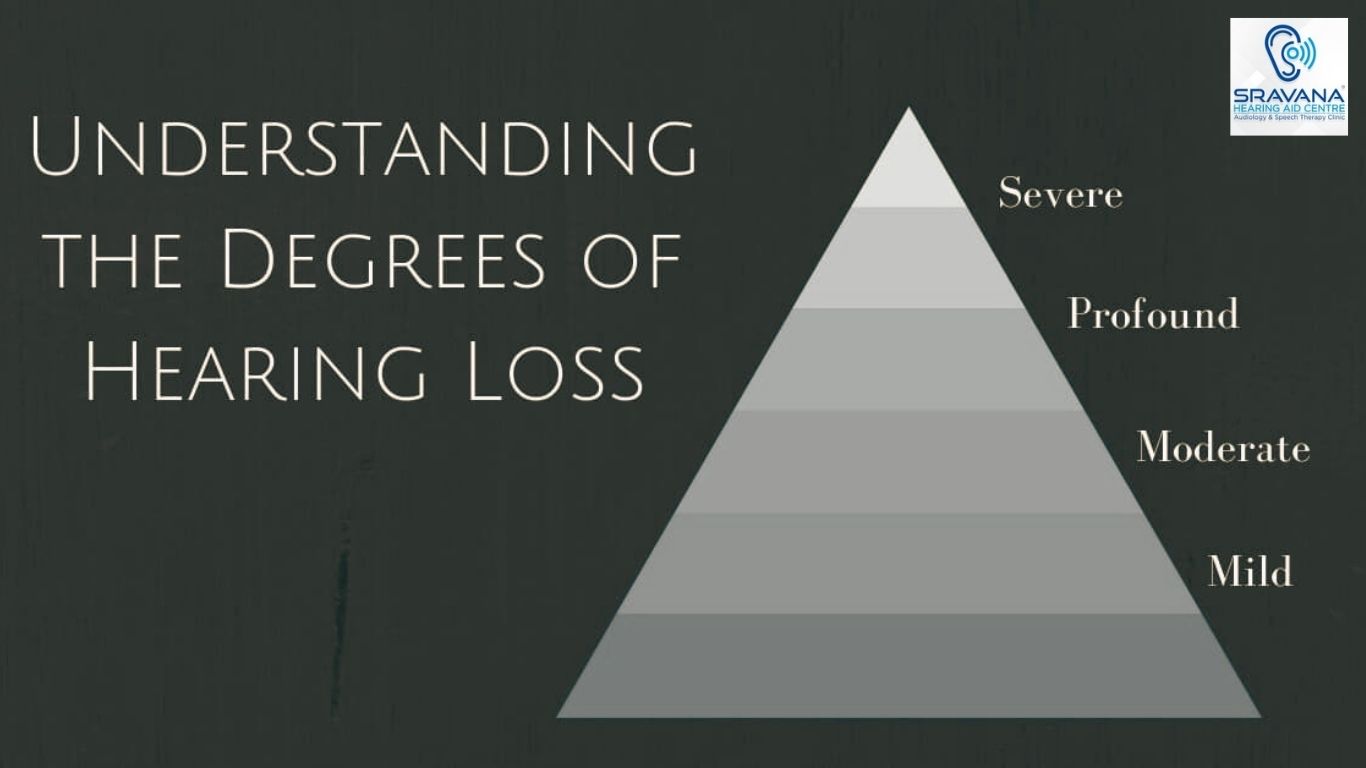
Five Degrees of Hearing Loss
Based on the World Health Organization (WHO) standards and clinical practices in India, hearing loss is categorized into five distinct stages.
1. Mild Hearing Loss (26 to 40 dB)
At this stage, however, most speeches can be heard in a quiet environment. But the soft ambient sounds—the tick of a bell, the rustle of a newspaper, or the hum of a ceiling fan—begin to fade.
Indian context: You can feel innocently content in peaceful, homely surroundings in a place like Kerala and Karnataka. But the moment you walk into a neighborhood market or wedding hall, the background noise overtakes the speech. You’re probably going to say, “Please communicate a little louder” or “I can hear you and still don’t recognize the speech.”
Do you want help? Many people look away from some loss and question it as just part of getting older. However, even at this stage, the Hearing Aid Center can provide discrete equipment that reduces “listening effort,” preventing intellectual fatigue during day breaks.
2. Moderate Hearing Loss (41 to 55 dB)
This usually happens at the end of the “denial” phase. In this case, you have difficulty hearing speech in everyday conversations, even in very quiet rooms. You will absolutely change the TV width as much as the ceiling, which disturbs others inside the residence.
Impact: You start skipping large chunks of conversations. If someone is talking to you from another room, you’re hardly taking in what they’re saying. On a smartphone, you can see the loudspeaker pressed to your ear.
Solution: This is the most common stage where humans seek to listen among useful resources. Modern virtual hearing aids are perfectly fine to cope with moderate losses through legibility specialization.
3. Moderately-Severe Hearing Loss (56 to 70 dB)
Speech is now very difficult to understand. Without hearing aids, you can easily hear a person if they are shouting or standing very close to you. Group discussions are a source of anxiety rather than joy.
Risk: Social withdrawal begins at this stage. Because it is difficult to observe what is happening, many people avoid their special family or supernatural gatherings
4. Severe Hearing Loss (71 to 90 dB)
At this stage, you cannot focus on speech at all without amplification. You may hear very loud environmental sounds, such as a stress cooker whistle, a car horn, or a noisy scream; however, they will likely sound muffled or distorted
Requirement: A high-powered “power” or “superpower” hearing aid from among specialized hearing aids is crucial here to maintain safety and communication.
5. Profound Hearing Loss (91 dB and above)
This is the most extreme degree. You may only feel the vibrations of sounds rather than hearing them. Even the loudest sounds are often inaudible. At this stage, while some high-gain hearing aids help, many individuals may also consider cochlear implants or rely on sign language and lip-reading.
Hidden Danger: Untreated Hearing Loss
In India, there is a common myth: “It’s just a little bit of hearing loss; I can manage.” But science tells a different story. When the ears stop sending clear signals to the brain, the part of the brain responsible for sound starts to weaken—a process called Auditory Deprivation. This has been linked to:
- Cognitive Decline: The brain works so hard to “decode” sound that it has less power for memory and thinking.
- Safety Risks: Not hearing a vehicle behind you on a busy road or an emergency alarm.
- Depression: The feeling of being “left out” of the family circle leads to deep loneliness.
By visiting a Best hearing aid center early, you aren’t just getting a gadget; you are preserving your brain health and your social life.
Why Choose Sravana Hearing Aid Centre?
Navigating the world of hearing health can be overwhelming. You might see advertisements for “cheap amplifiers” online, but these are not hearing aids. A real hearing solution requires a professional diagnosis.
At Sravana Hearing Aid Center, we integrate the current generation with deeply human technology. We learn that every ear is extraordinary, and that every way of life is unique. Whether you’re a student, a running expert, or a retired grandfather, our goal is to help you find a specialized tool that fits your loss rate and finances.
Our Process Includes:
- Precision Testing: Using advanced clinical audiometers.
- Trial Periods: We believe you should “test drive” your hearing.
- Custom Fitting: Ensuring the device is comfortable enough to wear all day.
- Lifetime Support: Regular check-ups to adjust your settings as your hearing changes.
Reclaim Your World of Sound Today
The lifestyle words are too beautiful to miss. Whether it’s the voice of your grandchild, the tone of a favorite movie, or the easy peace of pure communication, you need to hear it all
If you or someone you love is having trouble focusing, don’t wait for the problem to make you sick. Early intervention is the key to a better lifestyle.
Contact Sravana Hearing Aid Centre
We are here to listen, so you can hear. Reach out to our experts today for a comprehensive evaluation.
📞 Contact Us: 9449100200
🌐 Visit Our Contact Page: Book an Appointment at Sravana
Frequently Asked Questions (FAQs)
Is hearing loss always permanent?
It depends on the type. Sensorineural hearing loss (damage to the inner ear) is usually permanent and best managed with devices from a hearing aid center. Conductive hearing loss (caused by earwax or fluid) can often be treated medically or surgically.
Can I have different degrees of loss in each ear?
Yes. This is quite common. You might have mild loss in your right ear and moderate in your left. This is why a professional binaural (both ears) test is necessary to program your hearing aids correctly.
Will people notice I am wearing a hearing aid?
Technology has changed! Today’s hearing aids include Invisible-in-Canal (IIC) models that sit deep inside the ear and are virtually undetectable to the naked eye.
How often should I get my hearing tested?
If you are over the age of 50, or if you work in a noisy environment (like a factory or construction site), we recommend a baseline test once a year.
Do hearing aids help with the “ringing” in my ears (Tinnitus)?
Yes, absolutely. Most modern hearing aids available at our hearing aid center come with built-in “Tinnitus Maskers” that provide relief from the constant ringing or buzzing.
Why can’t I just buy a hearing amplifier online?
Amplifiers simply make all sounds louder—including background noise. A hearing aid from a professional center is a medical device that is programmed to amplify only the specific frequencies you are missing, ensuring clarity and protecting your remaining hearing.