As a society, we are remarkably disciplined in our particular elements of fitness. We schedule annual blood tests to check our cholesterol, go to the dentist when we have a toothache, and change our glasses prescription the moment the text content on our smartphones gets blurry. Yet one of our most critical sensory organs is routinely neglected until it reaches an acute crisis point: our hearing.
The hearing aid center in India has historically been conceptualized through a responsive lens. Most individuals only consider when they step into a professional hearing resource center when their hearing loss is so profound that daily communication is completely broken. This delay is a huge oversight. Hearing loss is no longer visible in a day; it’s a master of stealth, slowly eroding your clarity over the years, altering your social interactions, and placing heavy, invisible burdens on your brain.
Scheduling regular listening critiques is not really about determining approximately how loud the range should be. An essential aspect of preventative healthcare is protecting your relationships, your emotional balance, and your cognitive life.
Invisible Progression: Why We Fail to Notice Hearing Decline
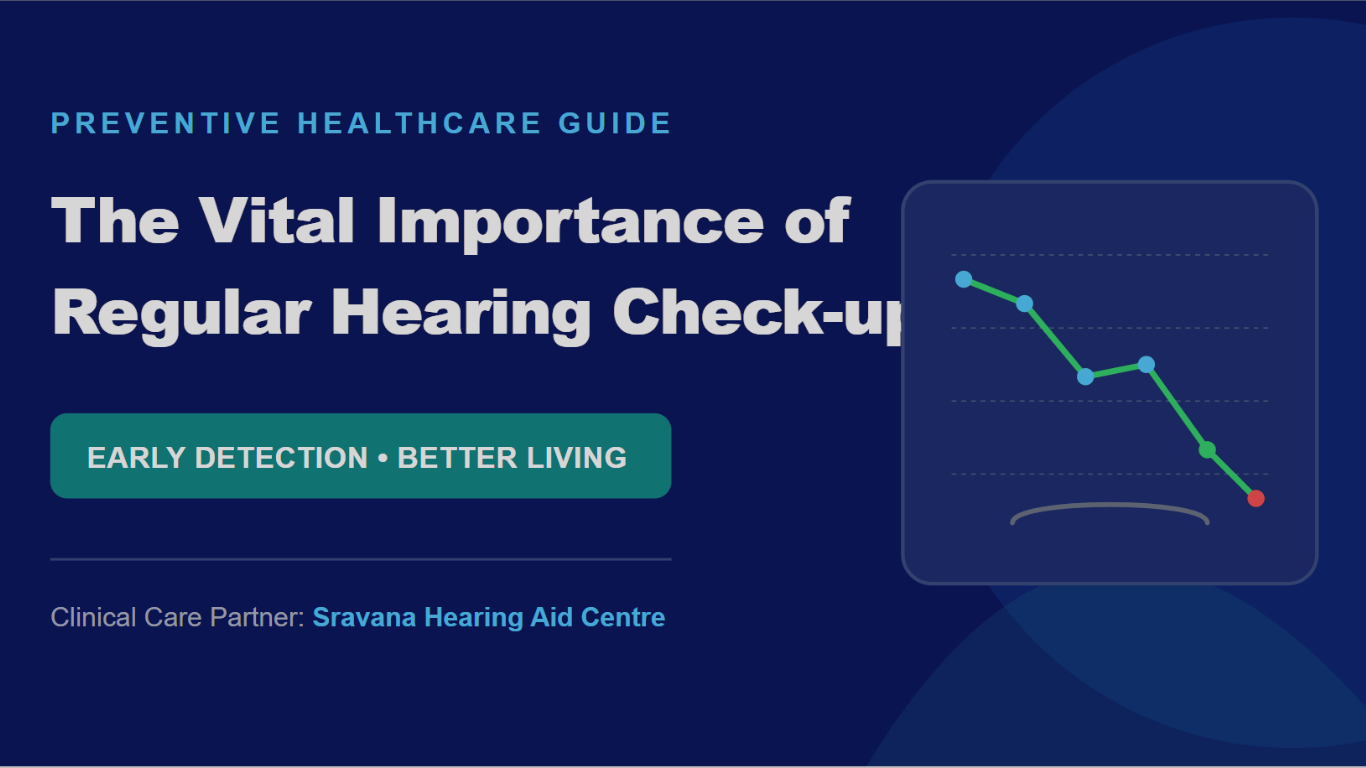
- The primary motivation for hearing that a loss goes untreated for seventeen years is that it starts gradually. Especially in cases of age-related degeneration (presbyacusis) or noise-induced damage, the degradation occurs in small, microscopic steps.
- You don’t wake up one morning to shocking silence. Instead, the primaries of hyper frequency sounds are muffled.
- The soft chirping of birds disappears outside your window.
- The delicate hum of the air conditioner fades from your consciousness.
- In conversation, overly voiced consonants, which include s, t, f, and sh, are difficult to distinguish.
Because your brain is uniquely adaptive, it compensates for this lack of facts through inferences. When a family member says “travel,” your mind completely fills in the gaps based on context, even if you’ve certainly heard “the other.”
Initially, this unconscious inference works reasonably well. However, as the decay deepens, the intellectual strain required to pursue normal communication increases dramatically.
You may complain that you turn the amplitude of the TV a few decibels higher, or that humans buzz louder than they used to. This is a traditional warning sign of hyper frequency hearing loss: you can hear the sound of a voice but cannot understand the meaning of the speech.
Cognitive Toll: How Your Brain Suffers in Silence
To truly understand why every day, a particular hearing resource center is so important in the Czech Republic, we need to shift our attitude from our ears to our minds. The peculiarity of our ears is therefore a biological microphone, which picks up sound vibrations, but the auditory cortex of the mind is miles, which decodes signals into vital language.
When hair cells inside the inner ear are damaged, the flow of electrical waves traveling across the auditory system is reduced. When the brain receives diluted, fragmented audio input, it must reallocate resources from other cognitive areas only to decode what is being said. This therapeutic approach is called cognitive overload.
When you spend your day catching up on calls in a busy office, having a hectic family meal, or dealing with lots of road noise, your brain is in a typical state of overwork, which is why many individuals with uncontrolled hearing loss are utterly resigned or experience complications throughout the night. They are not physically tired; Their brains are exhausted from the sheer effort of listening.
In the long run, a reasonable additional serious complication arises: hearing loss. If the auditory pathways of the mind are starved of sound stimulation for years, those neural networks eventually begin to weaken and shrink. The brain just forgets how to methodically complex sound systems.
Neurological studies have conclusively shown that untreated hearing loss in middle age is one of the main modifiable predisposing elements in increasing cognitive decline and dementia over the years. Regular testing ensures that the mind stays nicely motivated, preservation-focused, and mentally sharp.
Social and Emotional Cost of Untreated Hearing Loss
The effects of hearing loss are often not limited to individuals; It ripples outward, radically changing family dynamics and social circles.
Because admitting to a physical problem can feel uncomfortable, many individuals unconsciously develop coping mechanisms to hide their struggles. They were probably nodding in agreement throughout the verbal exchange without knowing for sure what was being said, or laughing at the irony of a punchline whose punchline they completely ignored.
However, this approach is unsustainable. Eventually, the fear of creating a socially awkward mistake or the sheer exhaustion of trying to observe a quick conversation leads to a temporary behavioral change: withdrawal.
The cycle of loneliness: The man or woman who loves active family gatherings, as soon as they chat with friends at fairs or at night, starts looking for excuses to live in another room. They avoid restaurants, decline social invitations, and slowly retreat to a quiet, secluded international.
This autonomous withdrawal is incredibly correlated with elevated stress, frustration, and deep emotional despair.
Furthermore, it strains relationships with loved ones. Family members often grow frustrated from constantly shouting or repeating themselves, leading to a breakdown in meaningful household communication. A simple, painless diagnostic test can prevent this emotional drift entirely.
What Happens During a Professional Hearing Assessment?
A major obstacle to keeping humans away from diagnostic clinics is the fear of the unknown. Many people find assessment listening to be a complicated, uncomfortable clinical test. In truth, this mile is totally non-invasive, totally painless, and takes much less than an hour.
When you step into a sophisticated facility like the Sravana Hearing Aids Center, your evaluation follows a detailed clinical protocol:
1. Otoscopic Examination
Before sound testing begins, the audiologist uses a lighted instrument called an otoscope to look inside the ear canal This checks for immediate body blockages, including earwax, foreign objects, earwax infection, or excessive buildup that causes short-term, reversible hearing problems
2. Pure Tone Audiometry (PTA)
You sit indoors with a quiet, sound-insulated audiometer outlet carrying a pair of calibrated headphones. The audiologist will play a series of notes at different pitches (frequencies) and volumes (decibels) to each ear. Every time you notice a voice—even assuming it’s as faint as a whisper—you have to press a button or reach out. This allows you to map your actual hearing threshold across the entire human speech spectrum.
3. Speech Recognition Testing
In this section, you may be asked to think of a series of common phrases that have been spoken for a particularly long time and repeat them. This look determines the exact capacity of your brain to allow for human speech separate from historical past distortion, giving the audiologist a clear reflection of your actual international conversational skills.
Why Early Detection Changes Everything
The information gathered during your baseline test serves as a powerful roadmap for your future well-being. Identifying a hearing deficit early offers distinct clinical advantages that disappear if you delay intervention:
- Preservation of Speech Clarity: Treating hearing loss early prevents auditory deprivation, ensuring your brain retains its natural ability to understand and interpret speech accurately over time.
- Wider Technology Options: When hearing loss is caught in its mild or moderate stages, you can opt for incredibly small, discreet, and nearly invisible custom styles, such as completely-in-the-canal (CIC) models.
- Seamless Adaptation: Reintroducing missing sounds to a brain that has only been starved for a short period is a smooth, rapid process. If you wait a decade, the sudden flood of sound can feel overwhelming, requiring a much longer adaptation process.
Prioritise Your Invaluable Hearing Health Today
Your hearing connects you directly to the world around you—it allows you to experience the voices of your children, the nuances of your favorite music, the fast-paced flow of your workplace, and the safety cues of your environment. Neglecting it doesn’t just dull your senses; it actively diminishes your overall quality of life.
Regular hearing evaluations should be treated with the exact same importance as monitoring your blood pressure or checking your vision. If you are over the age of 50, work in a noisy environment, or find yourself struggling to follow conversations in crowded rooms, it is time to take a proactive step for your long-term wellness.
At Sravana Hearing Aid Centre, we combine clinical expertise with advanced diagnostic technology to provide a clear, supportive framework for your family’s hearing health. Our specialized audiologists ensure your evaluations are highly accurate, transparent, and completely customized to your daily lifestyle needs.
Do not let hidden hearing loss distance you from life’s finest moments. To schedule a comprehensive, professional diagnostic evaluation for yourself or an elder in your family, visit our contact us portal at Sravana Hearing Aid Centre, or call our support desk directly at 9449 100 200 to secure an appointment today.
Frequently Asked Questions (FAQs)
At what age should a person begin getting regular hearing tests?
As a general health rule, adults should get a baseline hearing checkup by age 50. If the results are completely normal, a follow-up test every 2 to 3 years is sufficient. However, if you work in a high-noise environment (such as manufacturing, aviation, or music), or if you have an existing family history of early hearing loss, annual evaluations are strongly recommended.
Can earwax build-up cause permanent hearing loss?
No, earwax accumulation does not cause permanent damage. However, a hard, impacted plug of wax can entirely block your ear canal, causing a temporary drop in volume known as conductive hearing loss. This is easily resolved. During a routine check-up at a hearing aid center, an audiologist can safely identify and remove wax blockages, instantly restoring your hearing to its normal state.
Is a sudden drop in hearing considered a medical emergency?
Yes. While typical age-related hearing decline is slow and gradual, a sudden loss of hearing in one or both ears (usually occurring within a few hours or days) is a critical medical emergency known as Sudden Sensorineural Hearing Loss (SSHL). You must see an ENT specialist or an audiologist within 48 hours, as immediate medical treatment can significantly increase the chances of fully restoring your hearing.
How can I tell if my parent is struggling with hidden hearing loss?
Look out for common behavioral red flags, such as:
- Consistently turning up the TV or radio volume to a level that others find uncomfortable.
- Frequently asking people to repeat themselves, especially in public settings or family gatherings.
- Leaning forward significantly or straining to follow a speaker.
- Gradually withdrawing from group conversations or avoiding social calls.
Will my hearing test results be shared with me immediately?
Yes, your audiologist will plot your responses on a graph called an audiogram during the evaluation. They will sit down with you immediately after the test to explain the results, detailing whether your hearing falls into the normal, mild, moderate, or severe range, and discuss personalized management strategies if needed.