Hearing loss is an extremely personal journey that affects millions of people of all ages. When it comes to treatment, the most common question patients ask at our hearing aid center is, “What is the difference between a hearing aid and a cochlear implant?” While both technologies aim to improve communication and quality of life, they work in completely different ways and are designed for different types and degrees of hearing loss.
At Sravana Hearing Aid Centre, we believe that informed patients make the best decisions for their long-term health. This comprehensive guide will analyze the science, candidacy, and lifestyle implications of both hearing aids and cochlear implants to help you move toward better hearing.

What is a Hearing Aid?
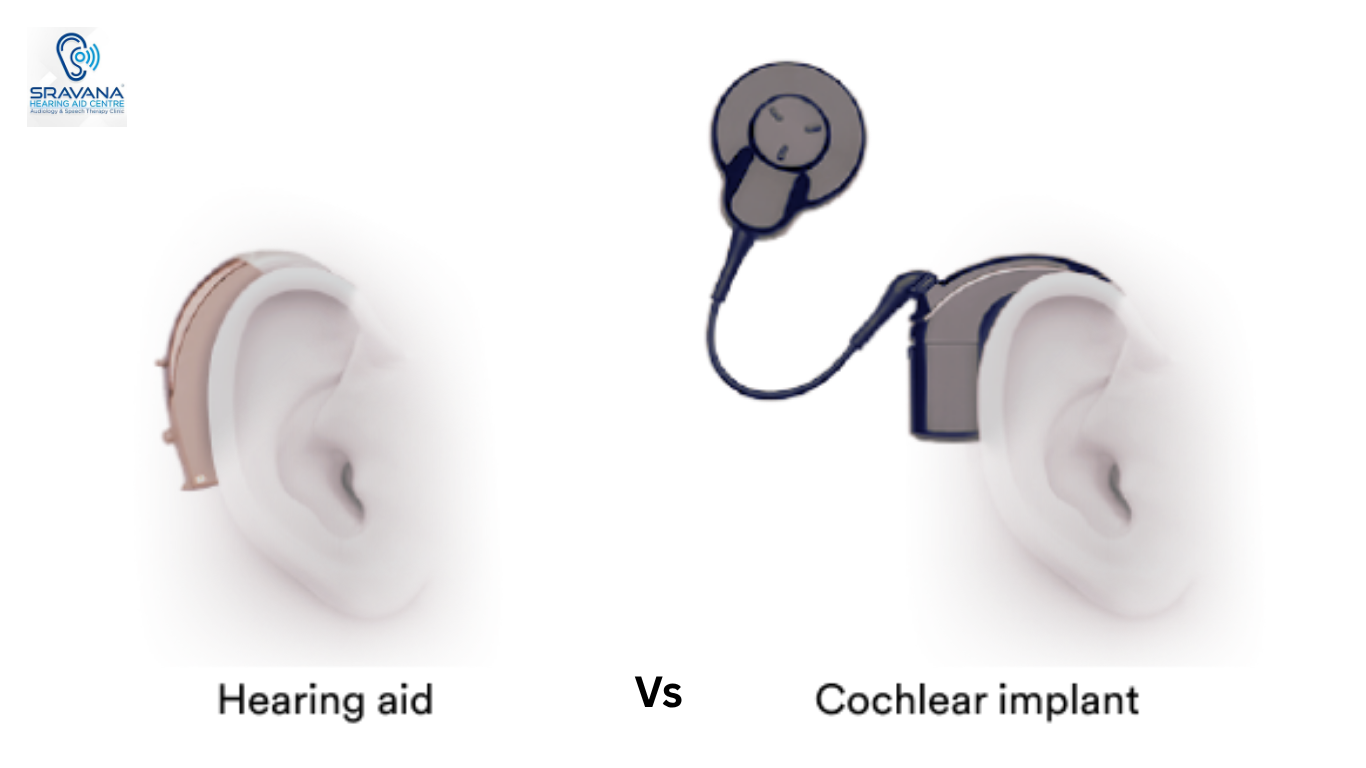
A hearing aid is a sophisticated, non-invasive electronic device worn in or behind the ear. Its primary function is to amplify sound. By making the sound louder and clearer, hearing aids help the remaining functional hair cells in the inner ear (cochlea) process and transmit these signals to the brain.
Modern digital hearing aids have three main components:
Microphone: Picks up sound waves from the environment and converts them into electrical signals.
Amplifier: Increases the strength of these signals based on the user’s specific hearing loss profile.
Loudspeaker (receiver): Sends the amplified sound to the ear canal to be processed by the natural hearing system.
Who are they for?
Hearing aids are typically the first line of treatment for individuals with mild to moderate hearing loss. They are highly effective for those who still have a significant amount of “residual hearing” and can understand at least 50% or more of spoken words during clinical testing.
What is a Cochlear Implant?
Unlike a hearing aid, a cochlear implant is not a “super powered” hearing aid. This is a surgically implanted medical device that bypasses damaged parts of the ear to directly stimulate the auditory nerve. It does not “restore” normal hearing; Instead, it offers another way to perceive sound through electrical stimulation.
How Cochlear Implants Work
The cochlear implant system has two main parts:
External sound processor: Worn behind the ear or on the head, it captures sound and converts it into digital code.
Internal implant: A receiver stimulator placed under the skin sends electrical pulses to an electrode array inside the cochlea, which then triggers the auditory nerve.
Who are they for?
Cochlear implants are generally recommended for adults and children with severe to profound sensorineural hearing loss who get limited benefit from conventional hearing aids. Candidates often have difficulty understanding speech even with the most powerful hearing aids.
Key Differences: At a Glance
| Feature | Hearing Aid | Cochlear Implant |
| Primary Function | Amplifies acoustic sound. | Provides electrical stimulation to the nerve. |
| Invasiveness | Non-invasive; worn externally. | Requires outpatient surgery. |
| Type of Loss | Mild to severe hearing loss. | Severe to profound hearing loss. |
| Adaptation Time | Usually two weeks or less. | 6 to 12+ months of rehabilitation. |
| Residual Hearing | Relies on remaining hair cells. | Bypasses damaged hair cells. |
Why Choose Sravana Hearing Aid Centre?
Choosing between these options requires accurate diagnosis and expert guidance. As a leading hearing aid center with over 18 years of expertise, Sravana Hearing Aid Center offers a patient-centric approach across 17+ clinics.
We offer:
Expert diagnostics: From pure tone audiometry to in-depth speech audiometry, we find the root of your hearing problems.
Advanced technology: We carry the world’s best brands such as Signia, Phonak and Oticon, including 100% invisible and waterproof options.
Lifetime Support: Our commitment doesn’t end with purchase; We offer free lifetime services and home visits for your convenience.
Take the First Step Toward Better Hearing
At Sravana Hearing Aid Centre, we are dedicated to making a profound difference in the lives of those we serve. Whether you need a high-performance hearing aid or a referral for a cochlear implant evaluation, our certified audiologists are here to guide you. Don’t let hearing loss limit your life—reconnect with your loved ones and the world around you today.
Contact us today to book your free consultation! Call us at 9449100200 or visit our website to schedule an appointment at a branch near you.
Frequently Asked Questions (FAQs)
Does a cochlear implant sound like natural hearing?
No, it sounds different. Many users describe the initial sound as “robotic” or “mechanical”. However, with time and aural rehabilitation, the brain learns to interpret these signals, often resulting in much clearer speech understanding than a hearing aid could provide for severe cases.
Can I wear a hearing aid in one ear and a cochlear implant in the other?
Yes, this is called “bimodal hearing”. For many patients with varying degrees of loss in each ear, using both devices in tandem offers the best of both worlds—the natural sound quality of a hearing aid and the clarity of an implant.
Is cochlear implant surgery dangerous?
Cochlear implant surgery is a standard outpatient procedure performed under general anesthesia, usually taking about two hours. While all surgeries carry some risk, it is generally considered safe for both children and seniors.
How do I know if my hearing aid isn’t enough?
If you find yourself still struggling to understand conversations in noisy places, relying heavily on lip-reading, or feeling that “volume” is no longer the issue but “clarity” is, you may be a candidate for a cochlear implant evaluation.
Are hearing aids only for old people?
This is a common myth. Hearing loss can affect people of all ages, including infants and young adults. Early intervention with hearing aids or implants is crucial for children to develop speech and language skills correctly.